Popular Posts
Showing posts with label psychology. Show all posts
September 22, 2017
What's Your Anime Personality Type? (MBTI)
Remember my post on anime and MBTI personality types? Click here
Well I made a way to figure out what anime characters you are like!
Take this quiz and find out!
Tags
anime,
blog,
briggs,
fans,
find out,
MBTI,
meyers,
number,
One,
Otaku,
personality,
psychology,
quizzes,
reviewers,
RPGHero,
type indicator
April 14, 2016
2nd Prime Time: Village to the Seas
2nd Prime Time
Village Meets the Seas
Fashion ~
For the beginning of the end, or the grander line. Go formal or mix and match your best outerwear. In this try, use light colored clothing or use the darker side. That's to show or hide your inner darkness or light. Choose carefully...
Trafalgar Law
Kuchiki Byakuya
Ego ~
Take a flashback and summon up your kid self. Think of shows like Naruto and One Piece where even before the first episode, the main characters had exciting young childhood lives that contrast with their hardcore adventure.
Blues ~
Don't fall into the trap of being too shounen, be as sad as you are actually during your days. Cry a little or be downcast in the broadcast, even if the days are sunny and warm. There's no turnaround to better days without the blues right there by your side on the bad days.
Mandala Harmony ~
What comes to mind in anime is FMA brotherhood or Clannad's Dango Daikazoku, right? Your own unity circle is between those two in truth. Put personal things in or even put some people in. You won't have good or bad dreams, without one (^^;)
Ebisu Gift Shop Giveaway!!! -- 2 genuine coin purses --
Bought 2 Japanese "Neko-san" coin purses and I want to give them to you! Please feel free to comment if you would like one!


September 12, 2015
What's your anime personality type? (MBTI)
Most of these guys are the same personality type, but some are different!!
Remember my post on anime and MBTI personality types? Click here
Well I made a way to figure out what anime characters you are like!
Take this quiz and find out!
Made by RPGhero-San!
March 28, 2015
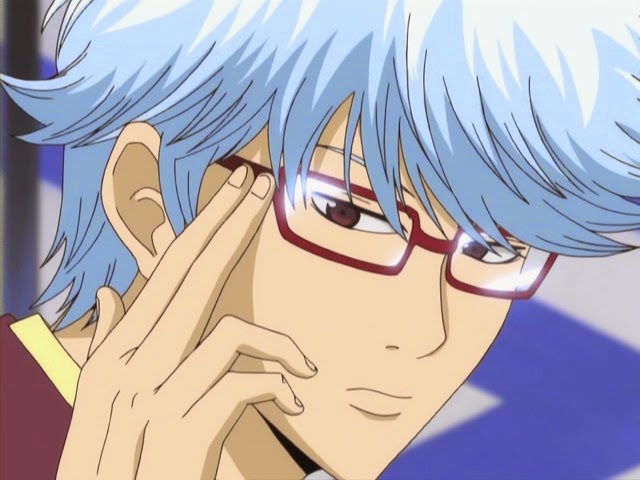
The Life and Time of Sakata Gintoki
![]() |
| Sakata Gintoki from the anime, "Gintama" |
Sakata Gintoki is arguably the choice candidate for best bachelor in anime. He's got it all. Sakata Gintoki, he's somewhat of an enigma also. The man is near or in his mid-twenties, making him a good role filler in a Seinen, or genre of anime where the main character is more mature. Gintoku resists stereotypes and is a self-proclaimed jack-of-all trades. Despite his unpredictable life and friends, his number one best trait is... that he is a shounen hero.
![]() |
| Gintoki defines his life, by the bread he gives away and not the bread he makes... O.o |
![]() |
| Somehow Gintoki gets into friendly quarrels... |
Gintoki doesn't always have it easy though. There are times, many times, that Gintoki gets stuck in a rut. The only thing is, Gintoki's key to being the best is that when he gets stuck in a rut it's usually because he jumps into every problem that his friends have. Is that what makes Gintoki such a prime bachelor?
Gintoki's adventures took him to some strange places. In one story, he got turned into a cat for carelessly peeing on a pet cemetery for cats and helped the stray alpha cat take down cat catchers that were mining cat balls and using an alien lion to fight all the stray cats in town. Yes, you read that correctly.
But Gintoki doesn't let those kind of setbacks phase him. He takes them with a kind of sarcastic, tongue-in-cheek attitude that characterizes a generation. Just a generation that Gintoki is a bit early to be a part of, being that he's in this twenties. The anime came out in the mid-2000's by the way but that doesn't matter because there aren't any time skips in Gintama, yet. Well there was a year timeskip I think, but it's not official.
As the "Odd-Jobs Gin-San", Gintoki doesn't go on missions or want to be the best. In fact, all Gintoki wants to do is take odd jobs for anyone, no matter what. That makes him kind of amenable and able to fit in with all kinds of people. No matter how strong of a shounen hero he is, he considers himself to be a regular guy in the prime of life but he'd rather make fun of the irony of being in the prime of life because right after the prime of life is the decline... But Gintoki makes it seem funny!
Over the course of his earlier life, Gintoki went through a lot of ups and downs. That was before he started "Odd-Jobs Gin-San" and helped the town take on random adventures. The world he grew up in was unfair too. He lost people who were important to him and lived the life of a poor homeless teenager, until he was helped out by others. You could say that Gintoki didn't have it easy and made it, in part, because he had really good friends, a good teacher, and someone who helped him out first.
Once Gintoki did start to change and his life got better. He realized what was really important in life. It's not that you're a shounen hero and you can fight anyone all the time. Gintoki lets himself be himself all the time. That's what makes him really popular and sometimes gets him in trouble...Gintoki's past life seems to always play a factor in his adventures. He IS a full-fledged shounen hero and his success depends on both defeating strong enemies and saving his friends from evil... Usually his enemies are way stronger than him at first and it seems like Gintoki will lose because he's never training. But the strength of the beliefs he gains from his everyday life always help him remember the right thing to do to win!
![]() |
| Instead of balancing his ego, Sakata Gintoki does not, which results in a balanced ego. I guess it's an Eastern Taoist/Zen kind of thing... |
That is what makes Sakata Gintoki, the best Seinen anime character.
...and also a shounen hero...
Tags
action,
anime,
bachelor,
blog,
Character,
comedy,
fandom,
funny,
gintama,
good guy,
humble,
interesting,
psychology,
Sakata Gintoki,
seinen,
shounen,
spotlight,
stereotype,
tropes
June 13, 2011
Why Japanese Psychologists are Smarter!

(Note: This post is about educational topics and Japan)
In America, psychology is straightforward and to the point: People would rather treat the disease than the person. This makes people wary about the American psychology treatment system.
Japanese psychologist, Naoto Kawabata, is working on the front lines of the Fukushima disaster, helping people adjust to the circumstances of the disaster. He's risking his life to help people that need it the most. Many people consider him a hero.
He's both a psychologist and a psychoanalyst which is interesting because he uses the Freudian theory! I've never heard of a Japanese psychologist using Freudian theory before. And, surprisingly, he is able to use it skillfully to help trauma victims.
His theory is called a "systemic-psychodynamic" model of trauma disaster aid. Instead of only treating people for the trauma of the disaster, he sought to treat past traumas as well, convinced that any weak areas in their psyche would could cause breakdowns in the future. For example, if you had family troubles before the disaster and later had a breakdown from the disaster, there's a good chance that those family issues were the root of the problem, and not the disaster itself.
There's a lot to learn from his method of helping... Instead of just fixing the short term problems, people can instead choose to delve in deeper to find the root of the problem and solve the long term problems that may arise. This way people are treated like humans instead of like insignificant patients with immediate circumstances.
Naoto Kawabata, thank you for making a difference in the world and "helping others" in their time of need!
April 18, 2011
Ichigo's Youthful Crisis!
Ichigo Kurosaki
What made Ichigo become Karakura town's Hero?
Ichigo Kurosaki, when his story began, was a 15 year old guy who could see ghosts and the spirits of the dearly departed. Already, he has above average capabilities. The average person would go crazy if they could see ghosts. Ichigo is no stranger to death, as a young child he had seen a monster called a hollow murder his mother. Ichigo knew from then on which apparitions were benevolent and which ones, if any like the one he'd seen before, were malevolent.
Ichigo comforting the ghost of a little girl
Ichigo's family all had the capacity to see ghosts however his father kept most of his capacities from Ichigo. Ichigo grew up familiar to the world of the spirits. But there are some things we can tell about Ichigo as a person. Ichigo is a kind-hearted person. Ichigo is a confrontational person, he even fights his own father. Ichigo is a serious person, unlike other heroes of animation, Ichigo doesn't eat more than he's worth or crack jokes. This is somewhat what one would expect from someone who can see ghosts.
Ichigo having after school sparring with his father
Ichigo is not a normal 15 year old. But I would disagree. Ichigo has a tangled relationship with two girls. One girl, Rukia Kuchiki, almost kicked Ichigo's butt and then later he saves her from execution. The other girl, Orihime, was kidnapped and later rescued by Ichigo. Ichigo had to fight very strong men for the sake of these girls. I would hypothesize that he likes one of them if not both of them. Ask yourself, would Ichigo rescue Ishida if he was kidnapped by Aizen?
Rukia, trying to get Ichigo to talk about his mother
Orihime and Aizen
This brings me to my conclusion. Ichigo is a young man with a mother complex. He is irresistably attracted to saving helpless young women from being taken from strange men. First Rukia, by her brother, the captains, and Aizen. Then Orihime, from Ulquiorra and Aizen. Ichigo wants to be a protector of people, of Karakura town, not the best fighter there ever was. Not once has Ichigo said he wanted to be the strongest Soul Reaper in the soul society, not once. Wanting to be the best is something related to a man complex or father complex.
Ichigo versus Grimmjow on the defensive
One of Ichigo's signature fights, against Grimmjow shows his personality clearly. The first battle with Grimmjow, Ichigo thought he would win but was defeated tragically. After that fight Ichigo went into a depression. Put a person with a man complex in that situation and you'll see that he'll want to become stronger at any cost to defeat the opponent, not Ichigo though. Ichigo went into failed protector mode and mulled about how he's not in any shape to protect the people around him. At one point he woke up and hit his mattress with his fist in a pseudo anger that gave way to depression. Ichigo later won the fight, but ONLY because Orihime was there to say "Don't die Ichigo!". Unconsciously Ichigo compared Orihime to his mother and the words "Don't die Ichigo!" became a ultimatum to avoid death at all costs. If it were Chad up on that pillar screaming "Don't die Ichigo", I doubt Ichigo would have won the fight without mortal injury. Later during his fight with Ulquiorra, Orihime was crying over Ichigo which caused him to become a true hollow. Showing that Ichigo really couldn't let Orihime down.
Will Ichigo actually get with one of the girls that inspire him? Or will he be subject to seeing them as his mother forever????
If you like my "fan-nonfiction" let me know!
-RPGhero
February 26, 2011
Psychology of the Shounen Hero, Part 1
Shounen is a type of storytelling in Japan aimed at young males. Battle shouen is a subset of shounen where the main character is also a hero and battles the forces threatening his or her way of life.
The hero archetype has been defined by C. G. Jung as the constructs that personify the hero. While the hero archetype isn't restricted to "hero stories" alone and can also apply to dramas and comedies. But I've noticed themes in shounen stories that may be different from the original limits of defined hero and villian archetypes. It might be just because in America we are used to the Superman or Spiderman who is straightforward and to the point, in most cases.
The shounen hero sometimes makes sacrifices. This may or may not be the same as originally defined. For example, in Bleach, Ichigo Kurosaki had to sacrifice his spiritual energy to defeat the arch-nemesis Aizen Sousuke. It's not clear if Ichigo's spiritual energy will make a comeback...

The shounen hero sometimes has an opposite character who's abilities are similar and different at the same time. For example, in Naruto Shippuuden, Naruto and Sasuke are rivals. Naruto's signature attack, the Rasengan, can only be done when he has his clones helping him stabilize the orb. That implies that he draws on the strength of his friends to fight. While Sasuke, his rival uses another signature energy attack where he grabs his opposite arm to bring out the energy. Which surely indicates self-reliance and may also indicate the pain, both physical and mental, of such an attack. Physcal pain being from the production of the electricity and mental pain from being alone. this theme may have also been portrayed at the beginning of the second Shippuuden movie where a lonely Sasuke fired a chidori electric blast into a waterfall while at the same time holding his head under the waterfall. I would take a guess that the creators wanted to portary Sasuke's bitterness at being lonely, and also showing a semblence to training.
Shounen stories will often host a character who has an uncontrollable shadow side tied to the very bad guys they face. These shows include, Naruto, Yu Yu Hakusho, Bleach, DragonballZ, and others. Usually one would think that the hero can control every aspect of themselves and that's usually the case at the end of the story or arc. The heroes often struggle with their shadow intensely througout the story and may even fight or make temporary sacrifices to it but only to control it in the end.
I told you! Reading can be fun! ^_^
Stay tuned for part 2!
The hero archetype has been defined by C. G. Jung as the constructs that personify the hero. While the hero archetype isn't restricted to "hero stories" alone and can also apply to dramas and comedies. But I've noticed themes in shounen stories that may be different from the original limits of defined hero and villian archetypes. It might be just because in America we are used to the Superman or Spiderman who is straightforward and to the point, in most cases.
The shounen hero sometimes makes sacrifices. This may or may not be the same as originally defined. For example, in Bleach, Ichigo Kurosaki had to sacrifice his spiritual energy to defeat the arch-nemesis Aizen Sousuke. It's not clear if Ichigo's spiritual energy will make a comeback...

The shounen hero sometimes has an opposite character who's abilities are similar and different at the same time. For example, in Naruto Shippuuden, Naruto and Sasuke are rivals. Naruto's signature attack, the Rasengan, can only be done when he has his clones helping him stabilize the orb. That implies that he draws on the strength of his friends to fight. While Sasuke, his rival uses another signature energy attack where he grabs his opposite arm to bring out the energy. Which surely indicates self-reliance and may also indicate the pain, both physical and mental, of such an attack. Physcal pain being from the production of the electricity and mental pain from being alone. this theme may have also been portrayed at the beginning of the second Shippuuden movie where a lonely Sasuke fired a chidori electric blast into a waterfall while at the same time holding his head under the waterfall. I would take a guess that the creators wanted to portary Sasuke's bitterness at being lonely, and also showing a semblence to training.
Right before Sasuke practically electrocuted himself :(
You shouldn't have ran away from your friends O.o Just jokes..
Shounen stories will often host a character who has an uncontrollable shadow side tied to the very bad guys they face. These shows include, Naruto, Yu Yu Hakusho, Bleach, DragonballZ, and others. Usually one would think that the hero can control every aspect of themselves and that's usually the case at the end of the story or arc. The heroes often struggle with their shadow intensely througout the story and may even fight or make temporary sacrifices to it but only to control it in the end.
I told you! Reading can be fun! ^_^
Stay tuned for part 2!
January 19, 2011
Otaku Pop Psychology Synthesis!
"You Are a Superhero, According to Psychology"
What if I said you are Naruto or Monkey D. Luffy?
If you didn't say, who? Then I'll tell you why!
Psychology tells us two things about when you watch anime.
1) When you watch an anime your brain cells mimic and copy the characters on screen, it's almost like you fought Sasuke back then right? Those cells are called mirror neurons, for those taking detailed notes. The extent to which your brain copies the characters depends on two things. One is how much you like and want to feel like that character. Two is how well the anime is made. Better anime that have better animation, that's truer to real life movements will make it easier for your brain to copy the character.
2) When you watch an anime you focus 100% on the anime and shut out all of the things that you usually think about... If you're an otaku, you agree!
Cognitive psychology studies have shown that people shut out all the things they usually think about and even if you know how the end of that show is going to play out, you'll still feel all the plot twists! This is because people are wired to be engaged in an activity and if you are just watching something on tv you are becoming engaged with the events IN the show, not your nosy parent nagging you about that chore you're putting off for anime.
Shh Focus on Flower!
So next time you watch Edward Elric pull a metal stake from his stomach you'll appreciate it!
Along with the next bad guy you take down!
Scientific References:
"Field Guide to the Die-Hard Fan" by Stephanie Booth. Psychology Today, February 2011.
"Instructional animations can be superior to statics when learning human motor skills" by A Wong, N Marcus, P Ayres, L Smith... Computers in Human Behavior, March 2009.
Subscribe to:
Posts (Atom)
Home
Welcome to
The Otaku Reviewers
The Otaku Reviewers
This blog, "The Otaku Reviewers", was started in February of 2010 on this very same platform, Blogger. At first, it was a venture into the informational and informal world of comics, anime, video games, and Japanese culture. In other words, just a random blog.
Over time, the founder of the blog credited with the pseudonym "RPGhero" was joined by two fellow bloggers and friends with the names "Chansu" and "Deretsun". Together the three bloggers looked up interesting Japanese culture facts, recommended new anime, talked about their own "otaku" interests, and traveled across the United States to various anime conventions.
There have been off periods when the blog ceased production of content and there have been times when there would be dozens of blog posts per week. The schedule varies depending on the lives of the people behind the alias'. However the pattern is that we always get back into the game with even newer information about Japanese culture, anime, video games, and other nerdy hobbies.
The motto of our blog is:
"A cure for your apathy and an inspiration for your dreams. ...Applies to Otaku, anime fans, J-pop junkies, and the like"
The purpose is to blog about cool stuff related solely to anime and otaku stuff. There's no other reason we're doing this.